


What Should I Do With My Plastic Yarn Stash?
- deeannh
- Aug 1, 2024
- 3 min read
Updated: Aug 1, 2024
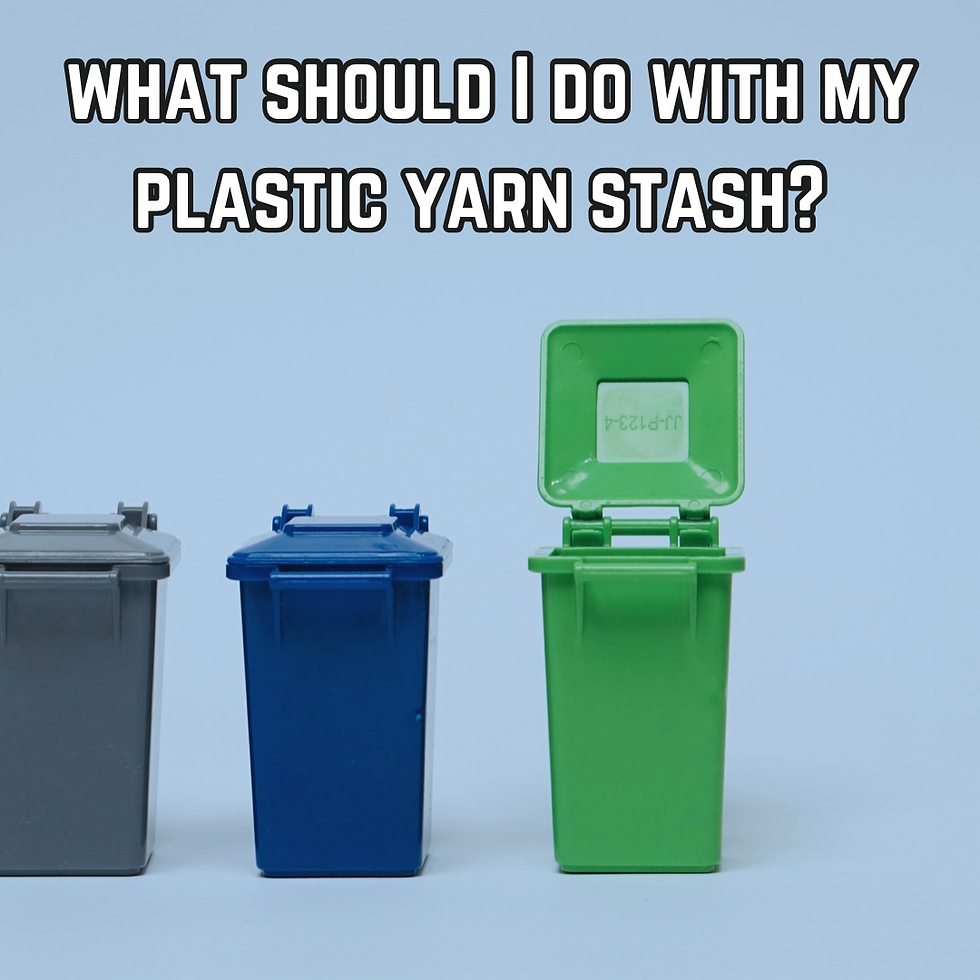
We all know plastic yarn, namely Polyester, Acrylic and Nylon takes hundreds of years to break down. We also know that washing plastic yarn leads to micro-plastics and nano-plastics into the water supply. Even recycled yarn has to go. But I still have a stash of yarn that I haven’t used. What can I make to use up my plastic yarn stash that won’t be so harmful?
If washing plastic yarn leads to plastic chemicals into the water, what can I do and what can I make? How about thinking of things you can make that don’t need washing very often? Maybe choose a few things that you don’t have to touch often like plant pot covers. How about the hanging baskets mounted on the wall? How about the carpet in the backyard patio? Outdoor items are probably perfect for that last ditch of scrappy yarn projects. I have made some totes and backpacks over the years. I don’t wash them that often.
Don’t sell them or give them away and let other people have to deal with the damaging effects. The party is over. We stopped using products with toxic ingredients and chemicals and want to eliminate the micro-plastics in water. We are learning more every day. We just can’t give the toxicity to friends and family members to get it off our hands. I say make things that you don’t have to wash much and then later toss it in the trash if it gets a hole or gets dirty. Maybe don’t fill the trash can but just put out a set amount every week for your normal collection to eventually get rid of them all. It’s time to phase them out. From the ground we get these petroleum based plastic yarn and back to the ground they go to decompose back to the ground. Some people informed me that their local trash is dumped into the ocean. Oh my, please avoid dumping trash into the ocean where marine life exists. Currently my city trash goes into a landfill. When the landfill is done, I hope they put 12”-24” of soil on top and layer some organic manure and plant some trees and wide woodchip paths. Let the native weeds and bushes take over for a while to make habitats for wildlife such as birds and insects. Under all that beautiful nature, the hidden petroleum plastic era trash will decompose back to soil.
I’m not buying plastic anymore. I buy things that will last and I don’t buy much. What I am saying is that our trash can is filled a fraction of what it once was and I know our whole neighborhood is the same way. Inflation has forced many to stop shopping for things we don’t need. So by choice or by consumer trends and because of lack of funds, we are all cutting back on useless things that clutter our homes. We have to get rid of the plastic yarn stash. It’s better to have items that don’t go through the wash often and to wait until its time is up with dirt and holes and let it go to begin the long decomposition process of the plastic yarn era in landfills. Keep an item or two if it is an heirloom and you want to preserve it.
Meanwhile, switch things over to more natural materials and fibers. I learned that in the winter here in California, that there are bugs that eat up my wool knitted accessories and having a wool blend has been much
better for me. I have been working with cotton a lot more this year and I learned how to handle it better. It’s a new world for me and I like it. Let me know if you have any more tips and ideas for others on this topic.


Comments